

Innovation teams rarely lack ideas. The challenge is deciding which ideas are worth pursuing, and where to invest time and resources to give an idea the best chance of success.
That’s where design can play a much earlier role in the decision-making process. We know that design-led companies achieve 32% higher revenue growth and 56% higher shareholder returns compared to industry peers, and when it comes to innovation, integrating design early can help brands reach product-market fit 2.1x faster than the competition.
So, why aren’t more brands embracing design earlier on in their innovation process? Rather than waiting for an innovation strategy to be fully formed before design becomes a part of the equation, rapid concepting can help make opportunities tangible earlier – giving teams something to react to, compare, test and refine before significant resources are committed.
Speed Doesn’t Always Mean Success
 When teams talk about accelerating innovation, speed is often the main focus. However, moving through the same process at a faster pace doesn’t necessarily lead to better results. In fact, it often does just the opposite.
As AI becomes a more accessible tool, we see that innovation and marketing teams are experimenting with artificial intelligence to visualize new product and packaging ideas. Though AI can help with initial ideas, it can also lead to more work down the road if concepts are not properly vetted or strategically thought out.
At Invok, we believe that rapid concepting is about gaining clarity and confidence, not cutting corners. Having the right visual expression, essential messaging, and compelling point of difference articulated on pack requires careful consideration and a deep understanding of your consumer. As such, rapid concepting is about getting to the heart of those elements as efficiently as possible, and design can be an engine to determine what is working and what needs to be adjusted.
Design can help accelerate three things during the innovation process: learning, alignment and momentum.
1. Accelerate Learning
As the old saying goes, a picture is worth a thousand words. While a strategic statement might help describe an idea or opportunity, the ability to visualize that idea with a thoughtfully articulated design concept helps create a more informed conversation among internal stakeholders and external partners.
A strategically crafted package concept can make an abstract opportunity tangible. Teams can see how an idea might come to life, identify what feels compelling, challenge assumptions and begin comparing different possibilities. From there, the learnings can inform consumer research, concept refinement, positioning, architecture and the next stage of development.
2. Accelerate Alignment
 Innovation rarely happens within a single department. Marketing, innovation, insights, R&D, sales, leadership and external partners can all bring different perspectives and opinions on which direction should be taken. This can create friction and slow down the innovation process. Unless, of course, there is a clearly defined design and communication direction informed by consumer and category insights, grounded in business objectives, and focused on solving a specific consumer need or market opportunity.
This objectivity can create a common reference point for everyone involved. Rather than developing ideas based on internal preferences or assumptions, design can provide an unbiased perspective on what the target audience needs to see, understand and believe. Instead of debating what a concept might look like, or how consumers will respond to it, key stakeholders can focus on the facts: What is the business trying to achieve? What gap are we solving? And does the idea effectively address both?
It won’t necessarily eliminate differing opinions, but it can make conversations more productive and decisions more focused. Ultimately, the goal is for everyone to be confident and excited about an innovation idea to keep the process moving quickly and efficiently.
3. Accelerate Momentum
Not every innovation decision requires a finished design, and it is important to match the level of design fidelity to the stage of innovation that you are at.
Early exploration, for example, might require nothing more than a few visual territories or rough package expressions. Research, on the other hand, may require concepts that are developed enough to provide credible stimulus without creating unnecessary production effort. The important thing is that each stage builds on the learning from the one before it. Rather than starting over at every stage, design becomes a continuous thread through the innovation process.
Design Deserves a Seat at the Table
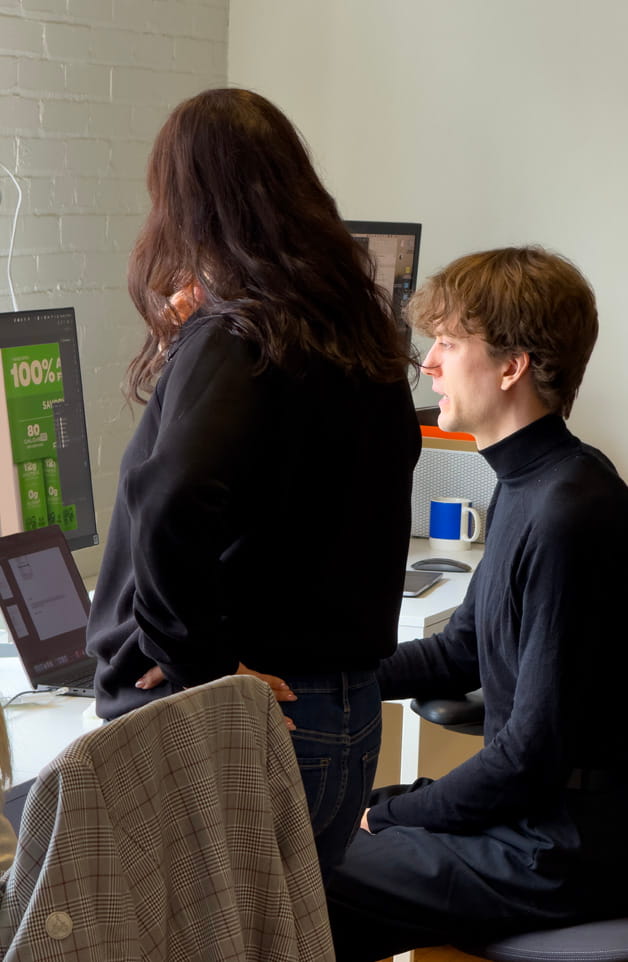 CPG teams are often balancing numerous business priorities, aggressive timelines, competing initiatives and limited resources. They may have a promising innovation idea but not enough internal capacity to explore it properly.
That’s where the right external branding design partner can make a difference. Not by adding another layer to the process, but by helping create efficiencies and turning ideas into real opportunities.
The most effective innovation processes are the ones that help teams learn sooner, align faster and make confident decisions earlier. When design becomes part of the innovation process, it can help inform and shape the decision itself.
Interested in learning how the right branding partner and a more effective design innovation process can help accelerate your team’s innovation pipeline? Get in touch today!